
macropoxy 646 mixing instructions
Macropoxy 646 Mixing Instructions: A Comprehensive Guide
Macropoxy 646‚ a fast-cure epoxy mastic‚ demands precise mixing for optimal performance in industrial coatings. This guide details procedures based on Sherwin-Williams’ product data.
Consult the latest Product Data Sheet for the most current recommendations‚ as formulations can evolve. Proper mixing ensures adequate film build and protective qualities.
Macropoxy 646 is a high-solids‚ high-build‚ fast-drying polyamide epoxy coating specifically engineered for robust protection of steel and concrete surfaces in demanding industrial environments. It excels in both maintenance painting applications and fabrication shop settings‚ offering a durable barrier against corrosion and wear.
This fast-cure epoxy mastic is formulated to deliver exceptional performance‚ but achieving its full potential hinges on meticulous mixing procedures. Understanding the components‚ correct ratios‚ and proper techniques outlined in the Product Data Sheet is crucial.
Sherwin-Williams designed Macropoxy 646 for ease of application while maintaining superior protective qualities. This guide will provide a comprehensive overview of the mixing process‚ ensuring consistent results and long-lasting performance. Always refer to the latest documentation for the most accurate information.
Safety Precautions Before Mixing
Prior to mixing Macropoxy 646‚ comprehensive safety measures are paramount. This epoxy system contains chemicals requiring careful handling to prevent adverse health effects. Always wear appropriate Personal Protective Equipment (PPE)‚ including chemical-resistant gloves‚ safety glasses with side shields‚ and a respirator suitable for organic vapors.
Ensure adequate ventilation in the mixing area to minimize inhalation of fumes. Avoid contact with skin and eyes; if contact occurs‚ immediately flush with copious amounts of water and seek medical attention.
Review the Safety Data Sheet (SDS) for Macropoxy 646 to fully understand potential hazards and recommended safety protocols. Keep the work area free of ignition sources and follow all local regulations regarding chemical handling and disposal.
Required Tools and Equipment
Successful Macropoxy 646 mixing necessitates specific tools for accurate proportions and thorough incorporation. Essential equipment includes calibrated mixing containers – typically pails or cans – ensuring sufficient volume for the intended application. Accurate scales are crucial for weight-based mixing ratios‚ offering precision over volume measurements.
Mechanized mixing tools‚ such as a Jiffy mixer attached to a drill‚ are highly recommended for consistent results‚ especially with larger quantities. Alternatively‚ sturdy mixing sticks can be used for smaller batches‚ but require more physical effort.
Additional items include protective sheeting to contain spills‚ appropriate PPE (gloves‚ goggles‚ respirator)‚ and cleaning solvents specified in the Product Data Sheet.
Understanding the Components: Part A & Part B
Macropoxy 646 consists of two primary components: Part A and Part B. Part A‚ often described as a mill white liquid‚ forms the base of the epoxy system‚ providing the foundational film-building properties. It’s a high-solids‚ high-build epoxy designed for robust protection.
Part B acts as the curing agent‚ initiating the chemical reaction that hardens the epoxy. It’s vital to understand that these components are not effective when used independently; they must be thoroughly mixed to achieve the desired performance characteristics.

Refer to the current Product Data Sheet for specific details regarding the chemical composition and handling instructions for each part. Proper identification and storage are key.
Determining the Correct Mix Ratio
Establishing the precise mix ratio is paramount for Macropoxy 646’s performance. Deviations can lead to uncured or improperly cured coatings‚ compromising adhesion and protective qualities. Always consult the most recent Product Data Sheet provided by Sherwin-Williams‚ as ratios can be subject to change based on formulation updates.
Generally‚ the mix ratio is by volume‚ but precise measurements are crucial. Avoid estimating; utilize calibrated mixing containers or dispensing equipment. Incorrect ratios can affect drying times‚ film hardness‚ and resistance to chemicals and abrasion.
Prioritize accuracy – a slight imbalance can significantly impact the final coating’s integrity.
Step-by-Step Mixing Instructions
Following a meticulous process is vital when mixing Macropoxy 646. Begin by confirming you have the correct mix ratio‚ referencing the current Product Data Sheet from Sherwin-Williams. Ensure both Part A and Part B are at the recommended temperature for optimal blending.
Carefully measure the required volumes of each component into a clean‚ dry mixing container. Avoid introducing contaminants. Initiate mixing slowly to minimize air entrapment‚ gradually increasing speed for thorough incorporation.
Scrape the sides and bottom of the container frequently to ensure complete homogenization. Continue mixing for the duration specified on the data sheet – typically several minutes.
Pre-Mixing Preparation
Prior to initiating the mixing process for Macropoxy 646‚ meticulous preparation is crucial. Verify you possess the latest Sherwin-Williams Product Data Sheet to confirm the precise mix ratio and recommended temperature ranges for both Part A and Part B.
Gather all necessary tools – mixing sticks‚ containers‚ and measuring devices – and ensure they are impeccably clean and dry. Any contamination can compromise the epoxy’s performance. Inspect both components for any signs of settling or unusual viscosity.
Prepare a well-ventilated workspace‚ adhering to all safety precautions outlined in the safety data sheet. This initial stage sets the foundation for a successful and consistent mix.
Adding Part B to Part A
When combining Macropoxy 646 components‚ always add Part B (the hardener) to Part A (the resin)‚ never the reverse. This controlled addition minimizes exothermic reactions and potential scorching. Pour Part B slowly and deliberately into the Part A container‚ avoiding splashing to prevent introducing air bubbles.
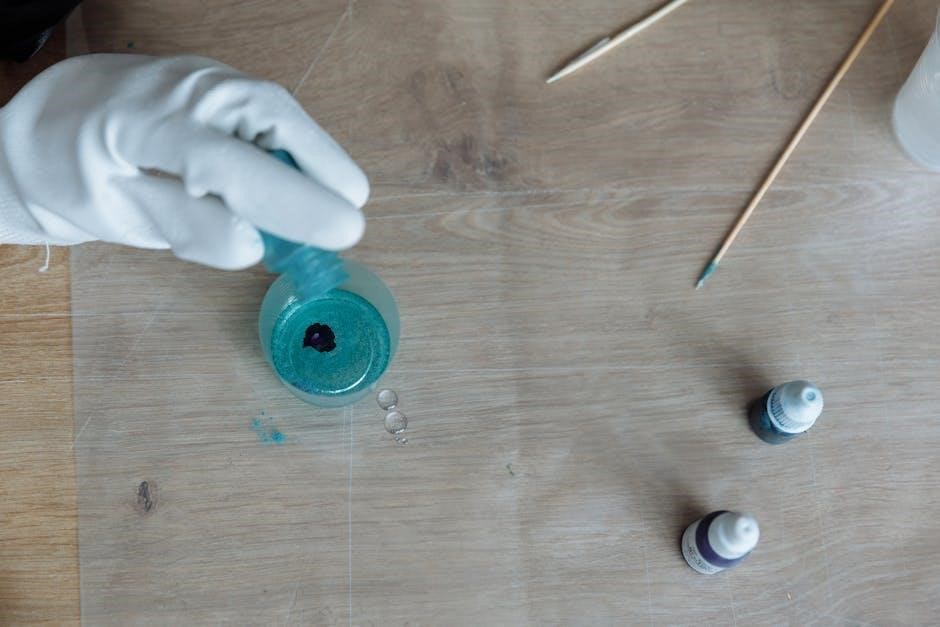
Maintain the correct mix ratio as specified on the current Product Data Sheet – deviations can significantly impact the coating’s properties. A gradual addition allows for better control and facilitates a more homogenous blend.
Do not attempt to mix excessively large batches at once‚ as this can shorten the pot life and increase the risk of incomplete mixing.
Thorough Mixing Techniques
After adding Part B to Part A‚ vigorous and consistent mixing is crucial. Utilize a mechanical mixer with an appropriate mixing blade – a Jiffy mixer is often recommended. Scrape the sides and bottom of the container frequently with the blade to ensure all material is incorporated.
Mix for the duration specified in the Product Data Sheet‚ typically several minutes. Insufficient mixing results in uncured areas and compromised performance. Avoid high-speed mixing‚ which introduces excessive air.
Visually inspect the mixture for streaks or swirls; a uniform color and consistency indicate adequate mixing. Continue mixing briefly after achieving homogeneity to confirm complete blending.
Mixing for Different Application Methods
Macropoxy 646 mixing adjustments depend on the application technique. For brush and roller applications‚ a slightly longer mixing time ensures optimal flow and leveling. Thoroughly scrape the container sides to achieve a consistent viscosity for even coating.
Spray application requires meticulous attention to air entrapment. Mix at a moderate speed to minimize bubble formation. Strain the mixed material through a suitable filter to remove any particulates that could clog spray equipment.
Always refer to the Product Data Sheet for specific recommendations regarding thinning or viscosity adjustments for spray applications. Proper mixing tailored to the method is vital for a successful‚ durable finish.
Brush and Roller Application Mixing
When preparing Macropoxy 646 for brush and roller application‚ prioritize a mix that provides excellent sag resistance and leveling. A slightly extended mixing period – approximately 3 to 5 minutes after component blending – is recommended. This ensures complete activation of the epoxy system.
Pay close attention to scraping the sides and bottom of the mixing container frequently. This prevents unmixed material from remaining and affecting the coating’s performance. A consistent‚ homogenous mixture is crucial for uniform film thickness.
Consult the Product Data Sheet for specific viscosity guidelines. Adjust mixing time slightly based on ambient temperature to maintain optimal workability.
Spray Application Mixing
For Macropoxy 646 spray applications‚ achieving the correct viscosity is paramount for proper atomization and film build. Following initial component blending‚ extend the mixing time to 5-7 minutes‚ ensuring thorough incorporation of Part B into Part A.
Strain the mixed material through a 60-80 mesh filter immediately before spraying to remove any potential contaminants or unmixed particles. This prevents nozzle clogging and ensures a smooth‚ consistent finish.
Refer to the Product Data Sheet for recommended spray viscosity ranges and reducer options. Adjust mixing and straining procedures based on the specific spray equipment used.
Pot Life and Working Time
Macropoxy 646 exhibits a limited pot life and working time‚ heavily influenced by ambient temperature. Pot life‚ the time the mixed material remains usable‚ typically ranges from 20-30 minutes at 77°F (25°C). Working time‚ the period for effective application‚ is generally shorter.
Higher temperatures significantly reduce both pot life and working time‚ accelerating the curing process. Conversely‚ lower temperatures extend these times but can increase viscosity. Always mix only the amount of material that can be applied within the working time.
Consult the current Product Data Sheet for precise pot life and working time specifications under varying temperature conditions. Careful monitoring is crucial to avoid premature curing.
Temperature Considerations During Mixing
Maintaining consistent temperature during Macropoxy 646 mixing is critical for optimal results. Both the components (Part A & Part B) and the mixing environment should ideally be between 65°F (18°C) and 85°F (29°C). Lower temperatures increase viscosity‚ making thorough mixing more difficult and potentially leading to an incomplete reaction.
Elevated temperatures accelerate the curing process‚ shortening pot life and working time. Pre-warming components within the recommended range can improve flow and workability in cooler conditions. Avoid direct sunlight or heat sources during mixing.
Always refer to the latest Product Data Sheet for specific temperature guidelines‚ as deviations can impact performance. Consistent temperature ensures proper chemical reaction and film properties.

Troubleshooting Common Mixing Issues
Uneven Mixing often presents as inconsistent color or performance‚ indicating insufficient agitation. Ensure scraping the sides and bottom of the mixing container thoroughly. Air Entrapment manifests as bubbles within the mixed material‚ potentially weakening the coating. Employ slow‚ deliberate mixing techniques to minimize air introduction.

If encountering a thick‚ unworkable mixture‚ verify the correct mix ratio and component temperatures. Avoid rapid mixing‚ which exacerbates air entrapment. Allowing the mixed material to sit for a brief period (bench rest) can help release trapped air bubbles.
Consult the Product Data Sheet for specific troubleshooting advice. Proper technique and attention to detail are key to resolving these common issues.
Uneven Mixing
Uneven mixing of Macropoxy 646 components results in inconsistent film properties and potentially compromised protection. This typically arises from inadequate agitation or insufficient scraping of the mixing container’s sides and bottom. Unmixed material can lead to localized areas of differing cure rates and adhesion.
Visually inspect the mixture for streaks or color variations. If detected‚ continue mixing‚ focusing on the container’s edges. Ensure both Part A and Part B are fully incorporated. A mechanical mixer is recommended for larger volumes to guarantee homogeneity.
Refer to the Product Data Sheet for guidance on achieving a uniform blend. Consistent mixing is crucial for optimal performance.
Air Entrapment
Air entrapment during Macropoxy 646 mixing introduces bubbles that weaken the coating’s integrity and aesthetic finish. Rapid mixing or pouring can exacerbate this issue. Entrapped air compromises corrosion resistance and reduces the film’s overall durability.
Mix at a moderate speed to minimize air introduction. After combining Part A and Part B‚ allow the mixture to stand for a short period – often referred to as “bench rest” – to permit bubbles to rise to the surface. Gently skim off any surface bubbles with a clean tool.
Consult the Product Data Sheet for specific recommendations regarding de-aeration techniques. Proper mixing minimizes air inclusion‚ ensuring a robust coating.
Surface Preparation Before Application
Optimal Macropoxy 646 performance hinges on meticulous surface preparation. Prior to application‚ substrates must be clean‚ dry‚ and free of contaminants like oil‚ grease‚ rust‚ and loose paint. Thorough cleaning is paramount for adhesion.
Surface preparation methods vary depending on the substrate. Steel typically requires abrasive blasting to achieve a suitable anchor profile‚ as detailed in the Product Data Sheet. Concrete may necessitate mechanical abrasion or acid etching.
Ensure the prepared surface meets the specified cleanliness standards (e.g.‚ SSPC-SP10 for steel). Proper preparation maximizes coating adhesion‚ extending the coating’s lifespan and protective capabilities. Inspect the surface carefully before applying the mixed Macropoxy 646.
Application Techniques After Mixing
Once Macropoxy 646 is thoroughly mixed‚ prompt application is crucial within its pot life. Application methods include brush‚ roller‚ and spray‚ each requiring specific techniques for optimal film build and uniformity. Refer to the Product Data Sheet for recommended film thicknesses.
Brush and roller applications demand even strokes to avoid lap marks. Spray application necessitates proper equipment setup and consistent spray patterns. Maintain the recommended wet film thickness during application.
Multiple coats may be required to achieve the desired total film thickness and corrosion protection. Allow each coat to dry adequately before applying subsequent coats‚ adhering to drying time guidelines. Proper application ensures maximum coating performance.
Cleanup and Disposal of Mixed Material
Following application of Macropoxy 646‚ immediate cleanup of tools and equipment is essential. Use appropriate solvents‚ as recommended in the Product Data Sheet‚ to remove uncured epoxy. Avoid using solvents not specifically approved by Sherwin-Williams.
Dispose of mixed material‚ cleanup solvents‚ and contaminated rags in accordance with local‚ state‚ and federal regulations. Do not pour waste materials down drains or into the environment. Properly sealed containers are required for disposal.

Consult safety data sheets (SDS) for detailed information on solvent handling and waste disposal procedures. Responsible disposal practices minimize environmental impact and ensure compliance.
Storage of Unmixed Components
Proper storage of unmixed Macropoxy 646 Part A and Part B is crucial for maintaining product quality and extending shelf life. Store both components in tightly sealed containers‚ in a cool‚ dry‚ and well-ventilated area‚ away from direct sunlight and heat sources.
Maintain storage temperatures within the range specified on the Product Data Sheet to prevent viscosity changes or premature curing. Avoid storing near incompatible materials‚ such as strong oxidizers or acids.
Regularly inspect containers for leaks or damage. Follow Sherwin-Williams’ recommendations for maximum storage duration to ensure optimal performance upon use.
Product Data Sheet Reference
The Macropoxy 646 Product Data Sheet (PDS) is the definitive source for the most accurate and up-to-date information regarding mixing and application. Sherwin-Williams regularly updates these documents to reflect formulation changes and best practices.
Always consult the latest PDS before beginning any mixing or application process. Key information within the PDS includes precise mix ratios‚ pot life estimations‚ recommended temperature ranges‚ and detailed safety precautions.
The PDS also outlines specific surface preparation requirements and application guidelines to ensure optimal coating performance. Access the current PDS through the Sherwin-Williams website or by contacting your local representative.
Sherwin-Williams Support and Resources
Sherwin-Williams provides comprehensive support for Macropoxy 646 users‚ ensuring successful mixing and application. For technical assistance‚ contact their customer service team at (216) 566-2917 (US/Canada) or SETIQ 01-800-00-214-00 (Mexico).
Their website offers a wealth of resources‚ including the latest Product Data Sheets‚ safety data sheets (SDS)‚ and application guides. Local Sherwin-Williams stores feature knowledgeable representatives who can provide personalized advice and product recommendations.
Furthermore‚ Sherwin-Williams offers training programs and on-site support to help applicators master Macropoxy 646 techniques. Utilize these resources to maximize coating performance and minimize potential issues.
Frequently Asked Questions (FAQ)
Q: Where can I find the most up-to-date mixing ratios for Macropoxy 646? A: Always refer to the current Product Data Sheet available from Sherwin-Williams‚ as formulations can change.

Q: What if I notice inconsistencies during mixing? A: Immediately stop and consult the troubleshooting section of the data sheet or contact Sherwin-Williams support at (216) 566-2917.
Q: Is it crucial to maintain a specific temperature during mixing? A: Yes‚ temperature significantly impacts pot life and working time; refer to the data sheet for optimal ranges.
Q: Can I scale the mixing quantities up or down? A: Yes‚ but maintain the precise mix ratio specified on the Product Data Sheet for consistent results.

Revision Date and Document Control
This document outlining Macropoxy 646 mixing instructions is subject to periodic review and revision by Sherwin-Williams to reflect product updates and best practices. The current revision date is December 4th‚ 2025‚ based on information available as of 10:29:12 AM ().
Users are responsible for ensuring they possess the latest version of this guide and the accompanying Product Data Sheet. Uncontrolled copies may be outdated. Document control is maintained by Sherwin-Williams’ Protective & Marine Coatings division.
For verification of document validity or to report discrepancies‚ please contact Sherwin-Williams support. Referencing the document version number is recommended.